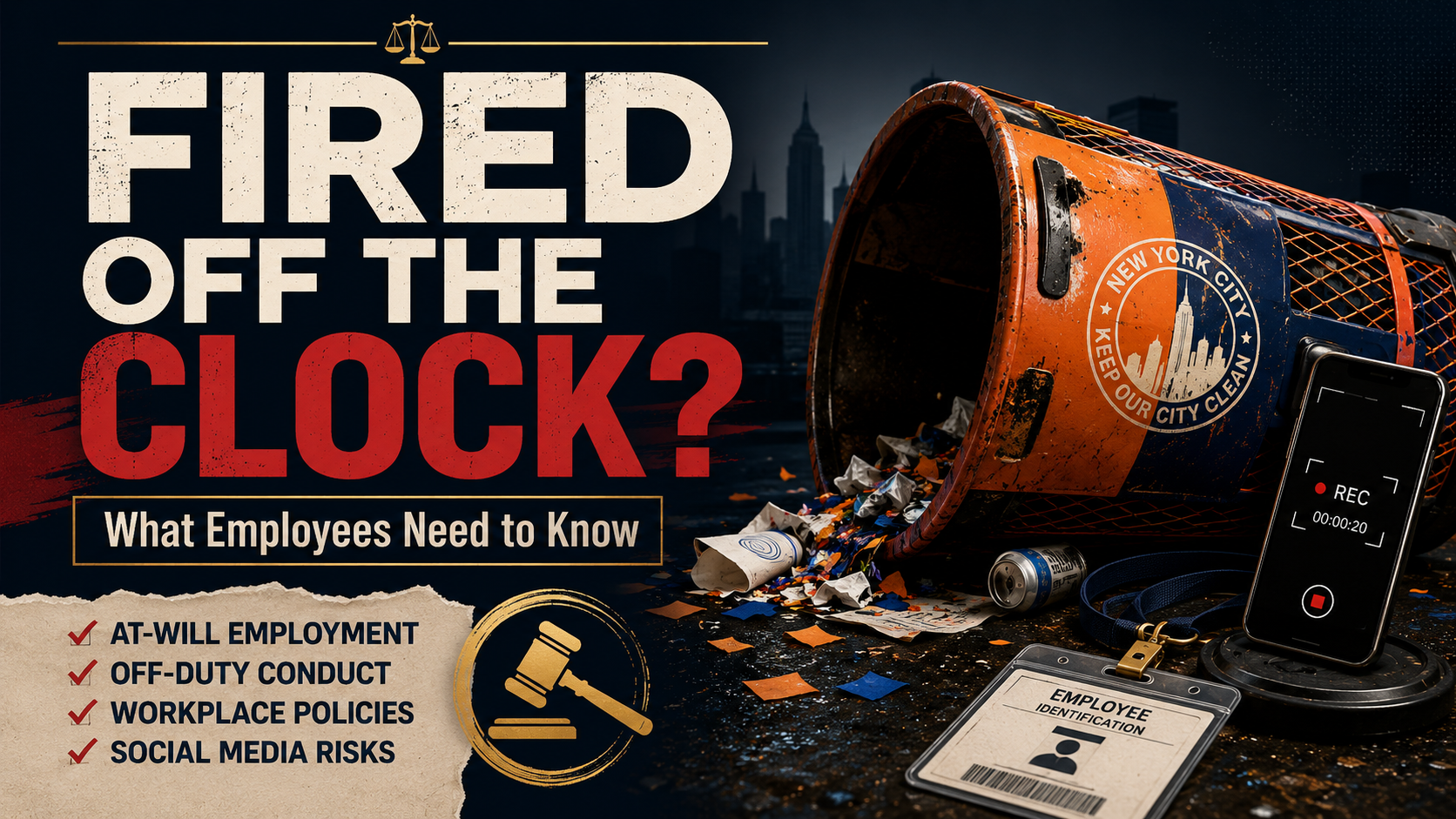
Can You Get Fired for Off-Duty Conduct? The JPMorgan Trash Can Video Explained
Being off the clock does not make you invisible.
One questionable personal decision can become an HR problem before you even make it back to work, especially when someone records it and the internet figures out where you work.
That is exactly why the viral video involving a former JPMorgan Chase executive has sparked a much bigger workplace conversation:
Can you get fired for off-duty conduct?
In many situations, the answer is yes. But the full answer depends on where you work, whether you are covered by a contract or union agreement, what actually happened, and whether the activity was legally protected.
What Happened in the JPMorgan Trash Can Video?
A woman identified in news reports as Angie Báez, a JPMorgan Chase executive, went viral after a video appeared to show her emptying a Knicks-themed New York City litter basket onto the street and walking away with it during the team’s championship celebration.
The trash can was later returned. A New York City Department of Sanitation spokesperson said Báez received two summonses totaling $175, including a $75 littering penalty and a $100 penalty for interfering with sanitation operations.
JPMorgan Chase confirmed only that the employee was “no longer with the company” and declined to explain the circumstances surrounding her departure. That distinction matters. Although the timing led many people to link the viral video to the end of her employment, JPMorgan did not publicly state that the incident was the sole reason for the decision.
Watch my full HR breakdown of how one viral moment became a serious workplace issue.
Can You Get Fired for Off-Duty Conduct?
In many cases, yes.
Your employer generally has less authority over your personal life when you are away from work. However, being off duty does not automatically protect you from employment consequences.
New York generally follows the at-will employment rule. This means an employer usually does not need a “good” reason to terminate an at-will employee, as long as the termination is not based on an illegal reason.
Employers cannot legally fire someone for protected discrimination, unlawful retaliation, or any other reason prohibited by law. Employees covered by certain employment contracts or union agreements may also have additional protections, including a requirement that termination be supported by just cause.
So no, “But I wasn’t at work” is not a magical force field.
Are Off-Duty Activities Legally Protected?
Some of them are.
New York Labor Law Section 201-d protects employees from discrimination based on certain lawful activities conducted outside working hours, away from the employer’s property, and without using the employer’s equipment.
The statute covers specific categories, including certain lawful recreational activities, political activities, union membership, and the lawful use of consumable products.
The important word is lawful.
The law does not provide unlimited protection for every activity an employee chooses to participate in after work. The facts matter, and protections vary by state.
Conduct involving alleged theft, littering, threats, harassment, violence, dishonesty, the use of confidential company information, or other possible violations of law or workplace policy may be treated differently from an ordinary lawful hobby or personal activity.
When Does Personal Behavior Become a Workplace Issue?
Your personal life and your professional life are separate until something creates a direct connection between them.
Here are some of the factors an employer may evaluate.
You became publicly identifiable
Your employer does not need to be tagged in the original video.
Once people identify your name, LinkedIn profile, job title, employer, or company email address, the organization may start receiving messages, complaints, media questions, or demands for action.
At that point, the incident is no longer happening completely outside the company’s orbit.
The conduct may violate a workplace policy
Many employers have codes of conduct that extend beyond behavior inside the office.
Depending on how they are written, company policies may address criminal activity, harassment, threats, discrimination, dishonesty, misuse of company identification or confidential information, conflicts of interest, social media behavior, or conduct that seriously damages trust in an employee’s ability to perform their role.
This is why employees should read the policies they acknowledged during onboarding instead of blindly clicking “I agree” and hoping for the best.
Your position requires a higher level of trust
Executives, managers, HR professionals, financial employees, attorneys, healthcare workers, public officials, and other highly visible employees may be held to higher standards.
That does not mean employers should have unlimited control over their lives.
It does mean an organization may consider whether an employee’s public behavior conflicts with the judgment, credibility, ethics, or leadership responsibilities required by the position.
The incident creates a legitimate business concern
Internet outrage alone should not determine whether someone loses a job.
However, an employer may investigate when an incident interferes with operations, harms professional relationships, raises safety concerns, undermines public trust, or creates a serious conflict with the employee’s responsibilities.
Can You Be Fired Without Being Convicted of a Crime?
Potentially, yes.
An employer does not always have to wait for a criminal conviction before making an employment decision. Workplace investigations and criminal proceedings are separate processes with different standards.
An employer may review available evidence, interview the employee, examine workplace policies, and decide whether continued employment is appropriate.
However, the decision still cannot violate an employment contract, collective bargaining agreement, anti-discrimination law, retaliation protection, or another applicable legal requirement.
This is also why employees should not assume that “I was never arrested” automatically means “my employer cannot do anything.”
What Employees Should Learn From This
You should not live your entire personal life terrified that your employer is watching.
You are allowed to attend events, have opinions, make mistakes, use social media, and exist outside your job.
But you should also understand the world we live in.
Almost everyone has a camera. A private account is not guaranteed to remain private. A deleted post may already be screen-recorded. And internet detectives can connect a face to a workplace before HR finishes its morning coffee.
Protect yourself by:
- Reviewing your employer’s code of conduct and social media policies.
- Avoiding company logos, badges, uniforms, or identification when engaging in controversial personal activities.
- Keeping confidential workplace information off your personal pages.
- Refusing to participate in behavior you would struggle to explain if it became public.
- Speaking with an employment attorney or union representative if you believe an employment decision was discriminatory, retaliatory, or otherwise unlawful.
And please do not lie during an internal investigation when the incident is already available in 4K from six different camera angles.
That will usually make a difficult situation worse.
What HR Should Do Before Taking Action
A viral video is not a complete workplace investigation.
Before disciplining or terminating an employee, HR should verify that the person in the content is actually the employee, preserve reliable evidence, allow the employee to respond, and determine which policy applies.
HR should also evaluate whether the activity is legally protected, whether there is a legitimate connection to the workplace, and whether similar situations have been handled consistently.
The questions should include:
- What has been verified?
- Was the conduct lawful?
- Which policy was allegedly violated?
- Is the employee covered by a contract or union agreement?
- Does the conduct affect the employee’s ability to perform the job?
- Have similarly situated employees been treated the same way?
- Is the proposed discipline proportionate to the verified conduct?
The Bottom Line
So, can you get fired for off-duty conduct?
Yes, depending on the facts, the law in your state, your employment status, your workplace policies, and whether the behavior is protected.
Being off the clock does not give an employer control over every aspect of your private life. But it also does not guarantee that public, identifiable, or potentially unlawful conduct will have zero professional consequences.
You do not need to live in fear of your employer.
You should, however, avoid risking your livelihood for a trash can.
Understand the Workplace Before the Workplace Blindsides You
Get the free Built By Nell Career Blueprint for practical strategies to protect your career, understand how HR works, and build more leverage at work.
Want More HR Insider Guidance?
Join the Built By Nell newsletter for honest workplace breakdowns, career protection strategies, and practical advice without the corporate word salad.
Disclaimer
This article is intended for general educational purposes only and does not constitute legal advice. Employment laws and individual circumstances vary by state, contract, workplace, and situation. Consult a qualified employment attorney or union representative for guidance regarding a specific employment matter.