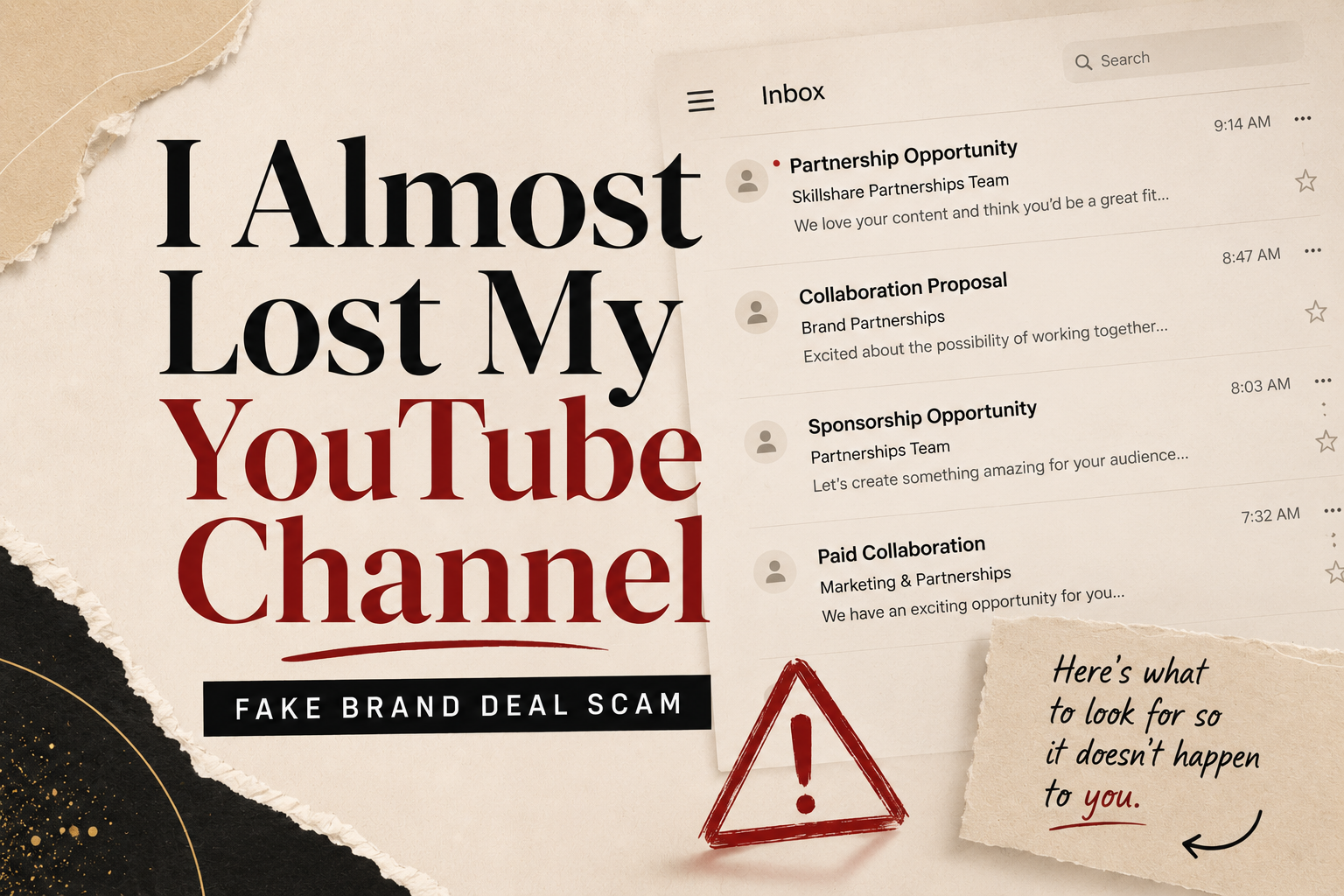
I Almost Lost My YouTube Channel to a Fake Brand Deal. Here’s What to Look For
A fake brand deal email almost cost me my YouTube channel. After 10 years in HR, I thought I was pretty good at spotting BS. Turns out scammers don’t care about your resume.
I was minding my business, doing regular creator things, when what looked like a legitimate Skillshare brand deal landed in my inbox.
And listen, I am not new to brand emails. I’ve been creating content for years. I know what sponsorship conversations usually look like. So when this email came through, it did not immediately scream “scam.”
That was the problem.
It looked professional. It sounded normal. The pitch made sense. The rate conversation felt believable. And for a quick second, I was excited.
Because let’s be real, when you’re a creator, side hustler, or entrepreneur, brand deals feel like confirmation that your work is being seen. So when a major company appears to reach out, your brain can go straight to, “Okay, period. The work is working.”
But that excitement is exactly what scammers are counting on.
Watch the full story here:
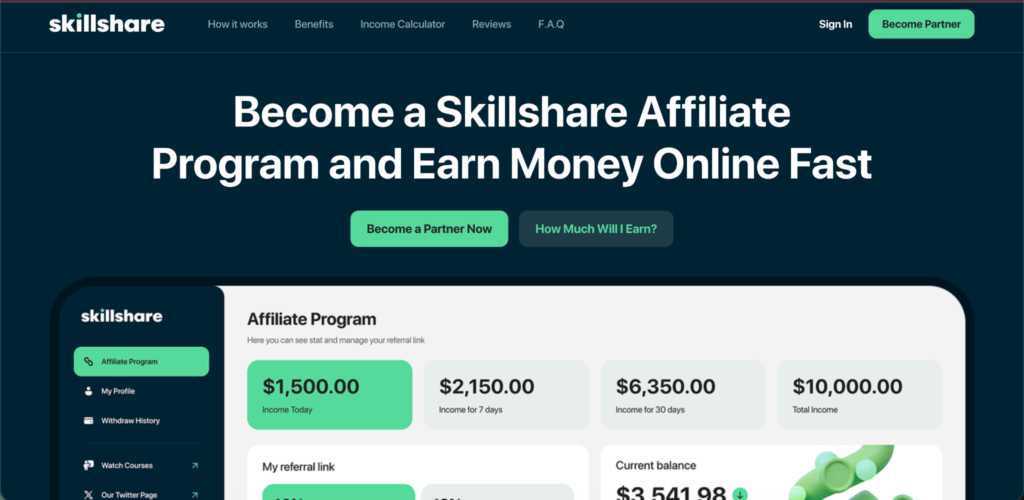
The Fake Skillshare Email Looked Real
The first email I received appeared to be from Skillshare. It looked like a normal sponsorship opportunity and nothing about the first impression felt obviously sketchy.
Then I slowed down.
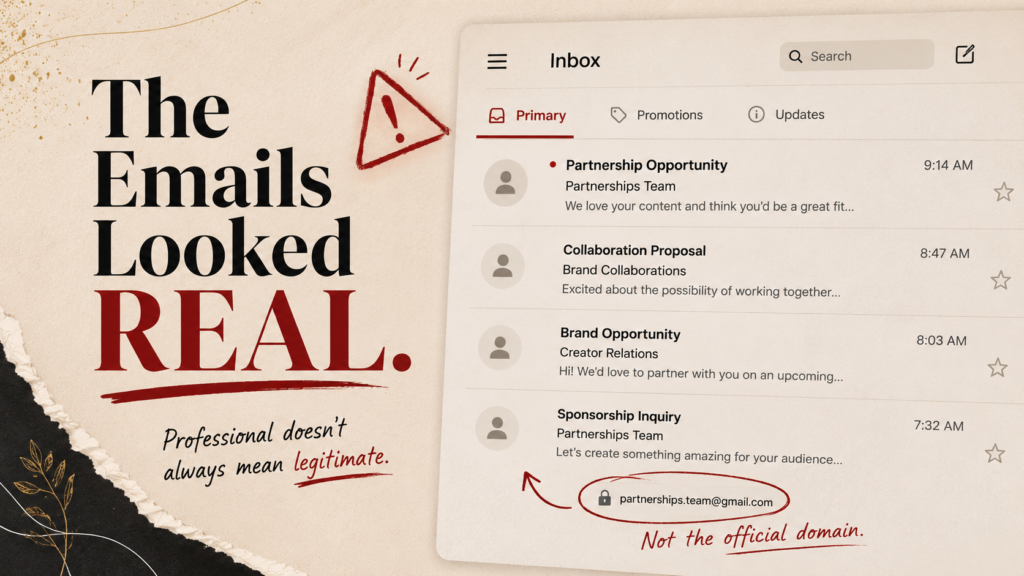
Once I started paying attention to the details, things began to feel off. The domain did not line up the way it should have. The communication was polished, but something was not right.
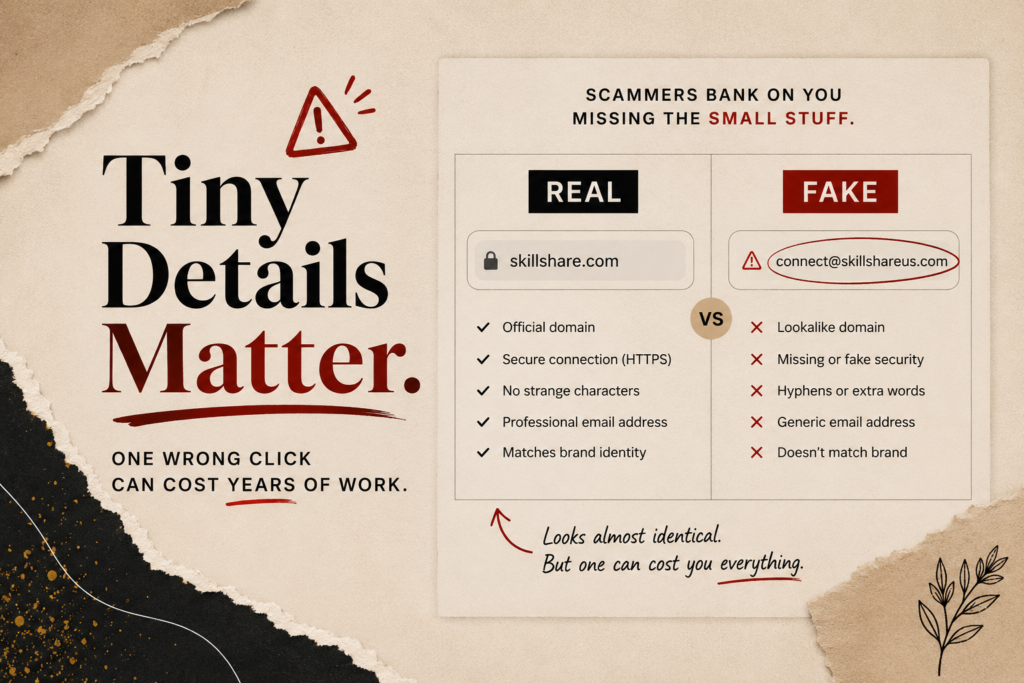
Skillshare has since warned creators that scammers are impersonating the company by offering fake influencer, sponsorship, and partnership deals. Their guidance is very clear: legitimate Skillshare emails come from addresses ending in @skillshare.com. Anything else should be treated as suspicious.
That is the part people miss. A fake brand deal does not always look messy. Sometimes it looks clean, professional, and almost normal.
Then It Happened Again
As if one fake brand deal was not enough, it happened twice on the same day.
The second scam impersonated another major education company. At that point, I was already on alert because of the fake Skillshare email. So I asked for verification from an official domain.
And here is where it got scary.
They actually sent what looked like a verification email. Then they gave me a long explanation about why they were not using the official brand email for regular communication.
It was giving:
“Here is a very professional reason why this suspicious thing is actually not suspicious.”
And honestly? That is what makes phishing scam creators so dangerous now. They are not just sending broken English emails with obvious typos anymore. They are anticipating your doubts and giving polished answers before you fully process the red flags.
Why This Almost Worked
The scam almost worked because it played on something very normal: excitement.
When you are building an online business, you check emails quickly. You are responding to opportunities. You are trying not to miss money. You are also probably editing, filming, answering comments, updating your website, creating products, and wondering why your laundry still has not folded itself.
So when a brand deal comes in, your first instinct may not be suspicion. It may be excitement.
That is where scammers get you.
They know creators move fast. They know business owners are juggling a lot. They know a professional-looking email can make people drop their guard.
And one bad click could cost you everything.
Your YouTube channel.
Your AdSense.
Your sponsorships.
Your email access.
Your business.
Years of work.
That is not drama. That is the reality of YouTube channel security.
Red Flags to Look For in Fake Brand Deal Emails
Here are a few things to check before you click anything:
1. The sender’s email domain
Do not just look at the display name. Anyone can make the sender name say “Skillshare” or “Partnership Team.”
Click into the email address and check the actual domain.
For a fake Skillshare email, anything that does not end in @skillshare.com is a red flag.
2. Weird links or login portals
If they send you to a random onboarding page, fake contract portal, or login link, pause.
Do not log in with your Google account just because the page looks official.
3. Tiny spelling changes
Some scammers use slight domain changes, accented letters, or characters that look almost identical to real ones.
That means your eyes may read the domain as normal when it is not.
This is exactly why details matter.
4. Downloads or attachments
Be careful with files, especially if they ask you to download something before discussing basic terms.
5. Pressure or urgency
If someone is rushing you to sign, click, log in, download, or keep the opportunity quiet, slow all the way down.
Real opportunities can survive a few extra minutes of verification.
This Is a Career Skill, Not Just a Creator Problem
This is not just about creators.
This is about professional judgment.
The same skill that protects you from a fake brand deal also protects you from fake recruiters, fake job offers, shady contracts, questionable vendors, and workplace nonsense dressed up in corporate language.
Professional-looking does not always mean legitimate.
A polished email does not always mean safe.
A logo does not always mean real.
That is why I always say details matter. Not because we are trying to be paranoid, but because attention to detail can protect your money, your career, your reputation, and your peace.
Slow Down Before You Click
If you receive a brand deal email, especially from a major company, take a breath before clicking anything.
Check the domain. Search for public scam warnings. Look up the person contacting you. Verify through the company’s official website. Ask for confirmation from an official email address. And if something feels off, trust that feeling.
Because scammers are getting better, and excitement can make even smart people move too fast.
I almost got caught, and I was already suspicious.
That is why I am sharing this.
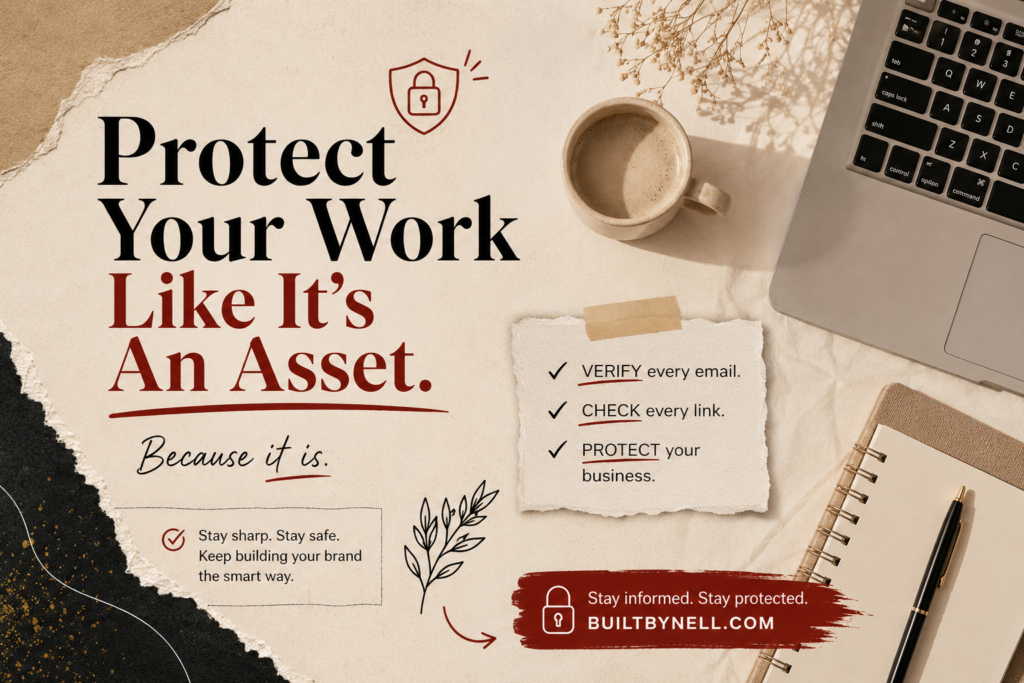
If you are building online, your work is an asset. Protect it like one.
If you want more career and professional survival strategies, download my free Blueprint guide and subscribe to my weekly newsletter at BuiltByNell.com so you never miss strategies like this.