YouTube Monetization Changes 2027: What Every Creator Should Do Now
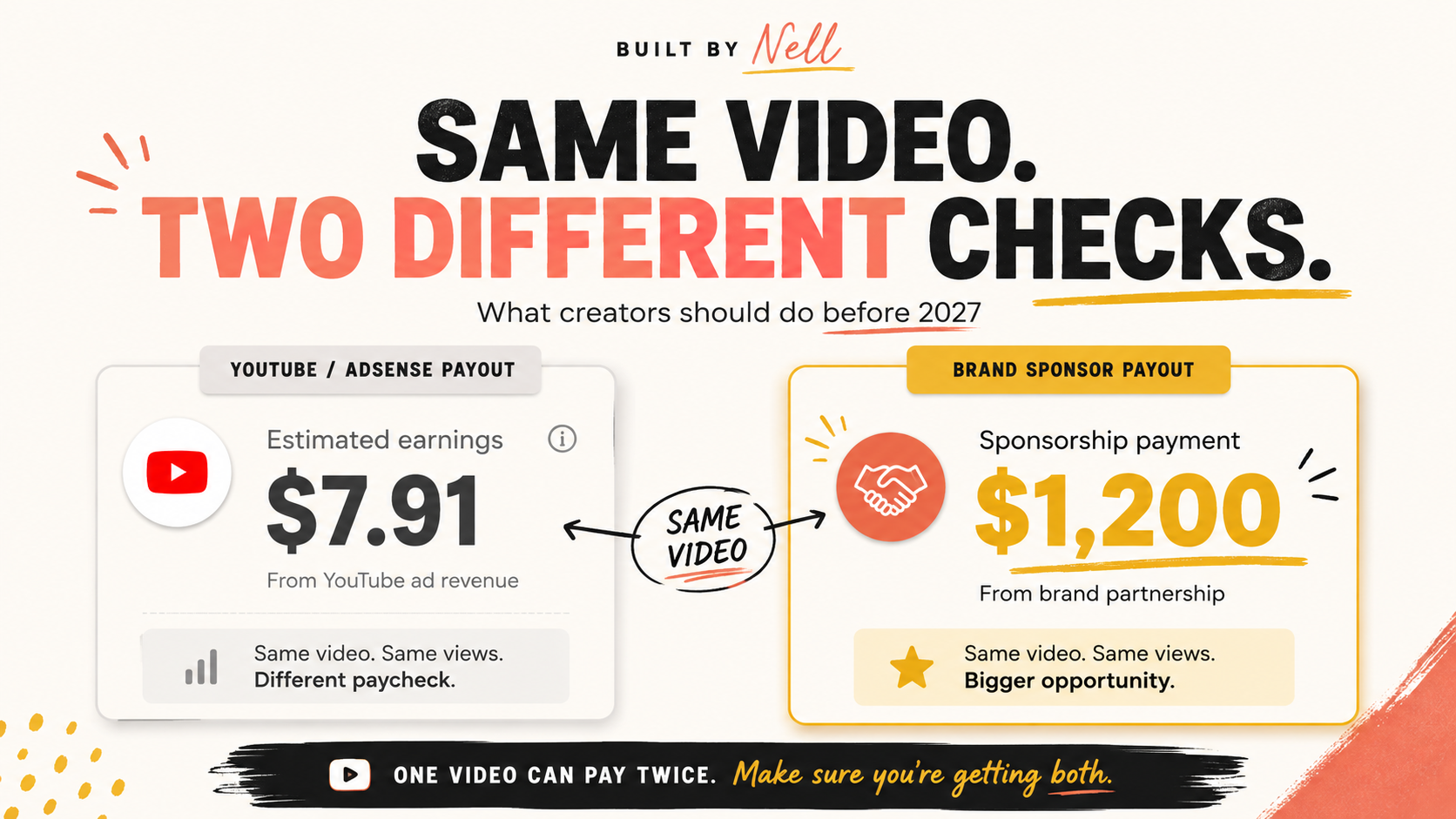
YouTube paid me $7.91 for a video. The sponsor in that exact same video paid me $1,200.
Same video. Wildly different checks.
These YouTube monetization changes are official: YouTube announced it’s doubling the requirements to get full ad and Premium revenue sharing starting February 1, 2027, and a lot of small creators had a very reasonable reaction: panic, then anger, then “wait, does this mean I’m never getting monetized?”
Here’s the honest answer: probably not never. But also, AdSense was never going to be your whole plan anyway, and this update is a pretty good excuse to build the rest of it.
Prefer to watch it explained? I break down the new rules, the separate Shorts requirement, and what to actually do about it in under 7 minutes.
YouTube Monetization Changes 2027: What’s Actually Different in the Partner Program
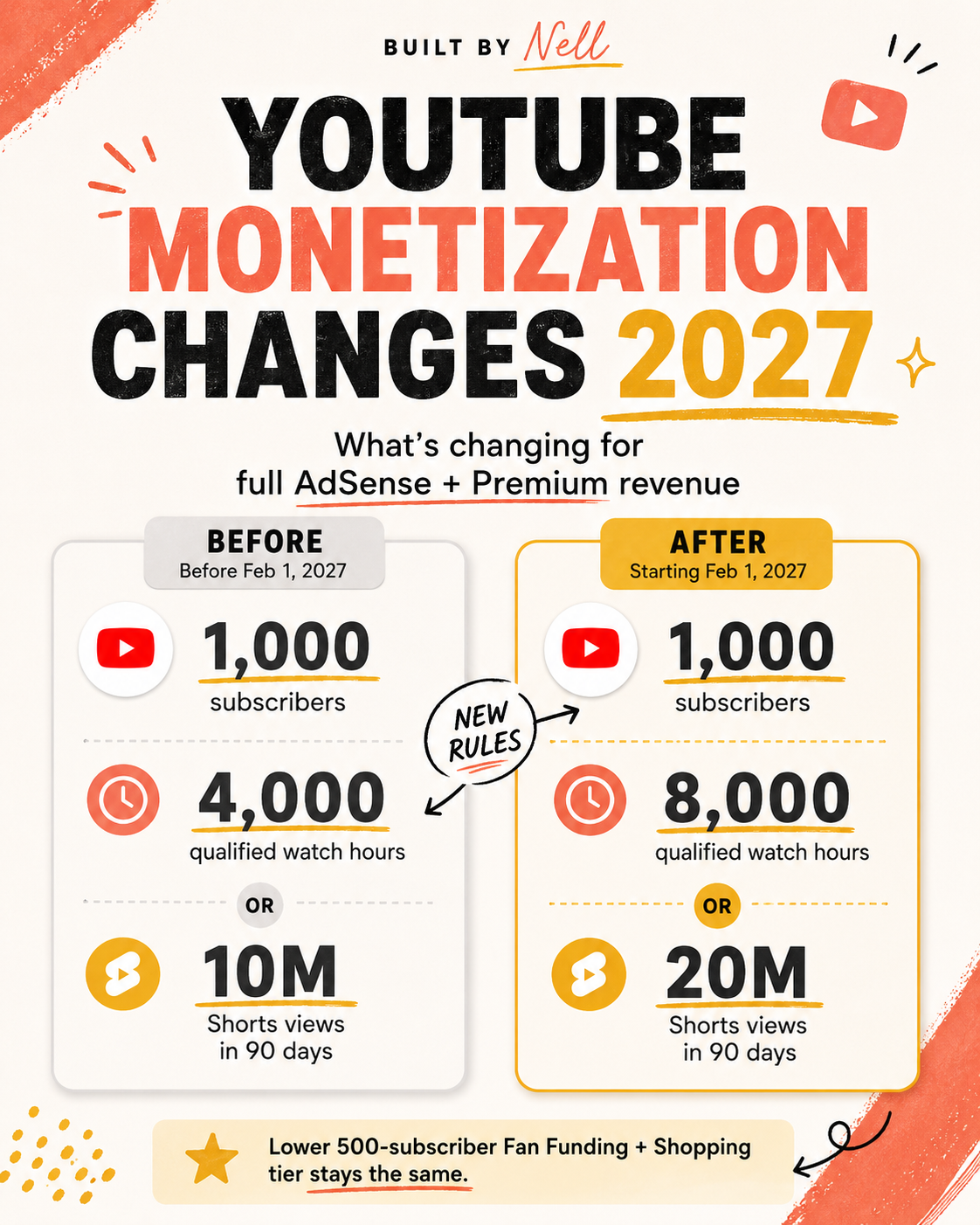
Starting February 1, 2027, new creators applying specifically for full ad revenue sharing and Premium revenue sharing will need 1,000 subscribers plus one of the following, according to YouTube’s official announcement:
- 8,000 qualified watch hours in the last 365 days, or
- 20 million qualified Shorts views in the last 90 days
That’s the threshold for that specific tier, not for every way to earn on YouTube. YouTube has confirmed the entry requirements for the lower tier, the one that unlocks Fan Funding (things like channel memberships and Super Chat) and Shopping, aren’t changing. That tier still asks for 500 subscribers, 3 public uploads in the last 90 days, and then either 3,000 qualified watch hours in the past 12 months or 3 million qualified Shorts views in the last 90 days. So if the new ads/Premium bar feels out of reach right now, it’s worth checking whether you already qualify for that smaller tier.
That 20-million-Shorts number is worth sitting with for a second. It works out to more than 222,000 views a day, every day, for three months straight. That’s not “post consistently and grow.” That’s “go viral repeatedly and don’t stop.” For most small creators, that’s not a realistic monetization path, it’s a lottery ticket.
It doesn’t stop at the entry requirement, either. Once you’re in the Partner Program, you’ll now need 10 million qualified Shorts views every 90 days to keep earning from the Shorts revenue pool specifically. Fall below that number and you don’t get kicked out of the program. Your long-form ad revenue keeps going. But your Shorts revenue pauses until you hit the number again.
If your channel is already monetized, this update does not remove you from the Partner Program. The new, higher bar is for creators applying to get into that ads/Premium tier after February 1, 2027.
What This Means If You’re Already in YPP
Starting February 1, 2027, YouTube is also changing how it decides whether a Partner Program channel counts as active. You’ll meet that bar by hitting at least one of these in the relevant window:
- 1,000 qualified watch hours in the past 365 days
- 1 million qualified Shorts views in the last 90 days
- 2 long-form uploads or 5 Shorts uploaded every 90 days
If you dip below whatever applies to your channel, YouTube gives you an extended 90-day window to get back to active status before anything changes. This isn’t a “post daily or lose everything” situation. It’s closer to a check-in requirement, and it’s worth knowing about rather than being surprised by it later. (Source: YouTube Partner Program overview & eligibility.)
Why This One Stings
YouTube can still run ads on videos from channels that haven’t qualified for revenue sharing. The platform makes money either way. You just don’t get a cut until you clear the new bar. That’s the part that has creators genuinely upset, and it’s a fair thing to be upset about.
But here’s the harder truth underneath it: YouTube was always rented land. The platform sets the requirements. The platform controls the algorithm. The platform decides what “qualified” means. That was true before this update too, it’s just more visible right now.
That doesn’t mean stop using the platform. It means stop treating the platform like it’s the entire business.
You Don’t Have to Wait for AdSense to Start Making Money
Here’s the thing nobody says loudly enough: you don’t have to wait until you clear the full ads/Premium threshold to start earning. That tier has the highest bar and the least amount of control on your end. Building income outside of ad revenue doesn’t require YPP eligibility at all.
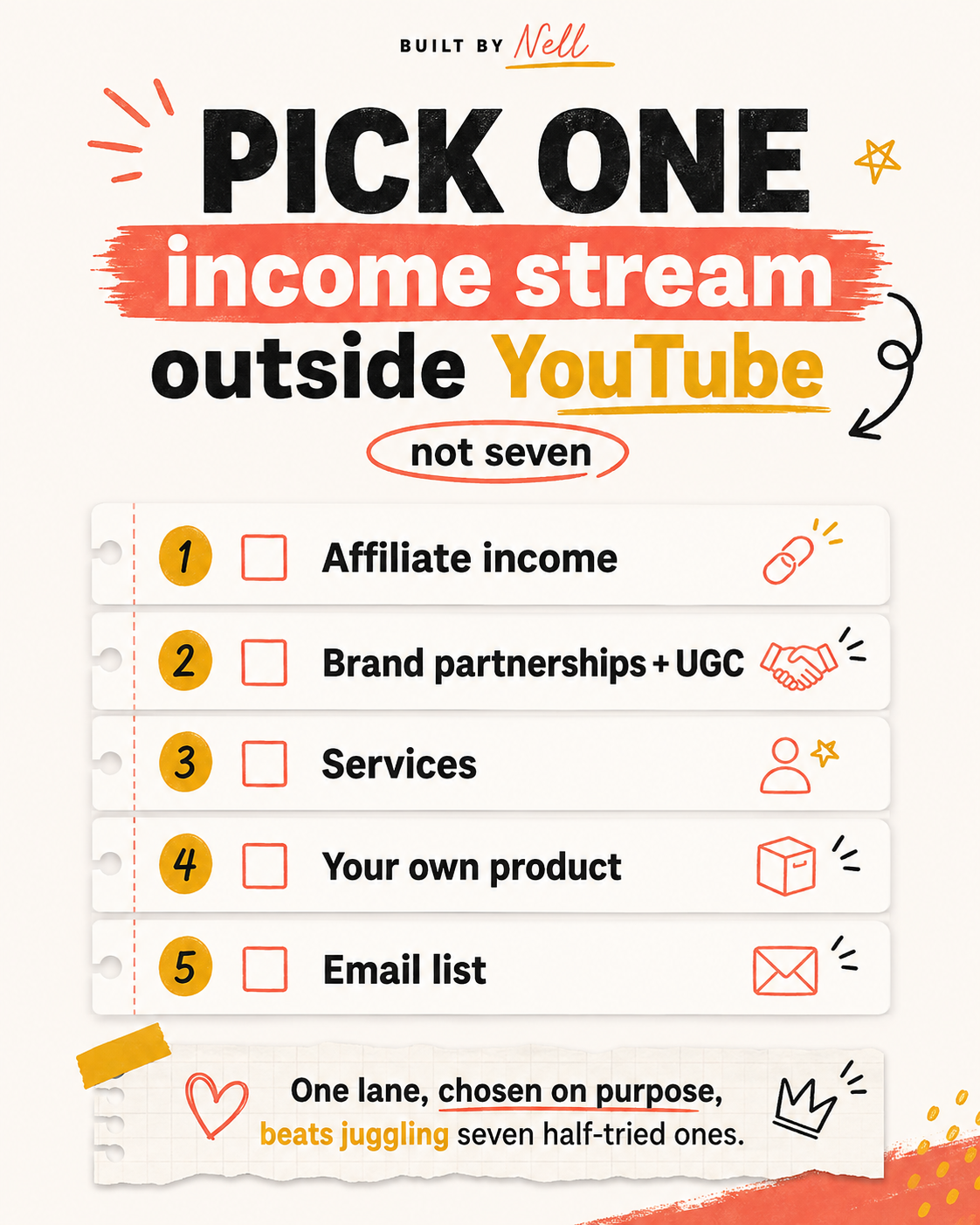
If you review products, affiliate income doesn’t require any subscriber count. If you teach a skill, a service, a guide, or a coaching offer works the same way. If you create in a niche like beauty, lifestyle, fitness, or home, direct brand partnerships and UGC work are realistic even at a smaller size, because brands are paying for audience fit, not just reach. You can also build your own product, or start growing an email list, starting today, with zero platform approval required.
Which lane makes sense depends on your content, not on a formula. But if brand work or UGC is the direction that fits what you already make, the part that trips people up isn’t finding the opportunity, it’s knowing what to charge once it lands in your inbox. That’s a solvable problem, and it’s the one I built the Brand Deal Calculator to solve.
If You’re Already Close, Don’t Quit
If you’re near the current threshold, this isn’t the moment to abandon ship. Go into your analytics and find the videos actually earning you watch time. Study what people click on and stay for. Then make more of that, specifically.
This is also not the time to be posting one vlog, one product review, one story time, and one cooking video with zero connection between them. Give YouTube (and your actual audience) a clear answer to one question: who is this channel for?
Once you have that clarity, pick one way to make money outside of YouTube. Not seven. One. If you’re weighing options, I’ve also broken down other ways to diversify with AI. If brand deals or UGC work sound like your best next move, the Brand Deal Calculator walks you through evaluating the offer, not just the number, before you reply.
Every Video Needs a Job
The other shift I talk about in the video: every video should lead somewhere. Not just collect views and disappear. That could be an affiliate link, a service, your own product, or a free resource that grows your email list.
The email list part matters more than it sounds like it should. It’s the one piece of your audience you actually own. If YouTube changed its rules again tomorrow (and it will, eventually), your email list doesn’t care. Neither does your website, your existing brand relationships, or the fact that you already know how to pitch and negotiate.
Know What Your Work Is Worth Before You Say Yes
This is the part that actually determines whether a brand partnership is worth your time: knowing what to ask for before you reply.
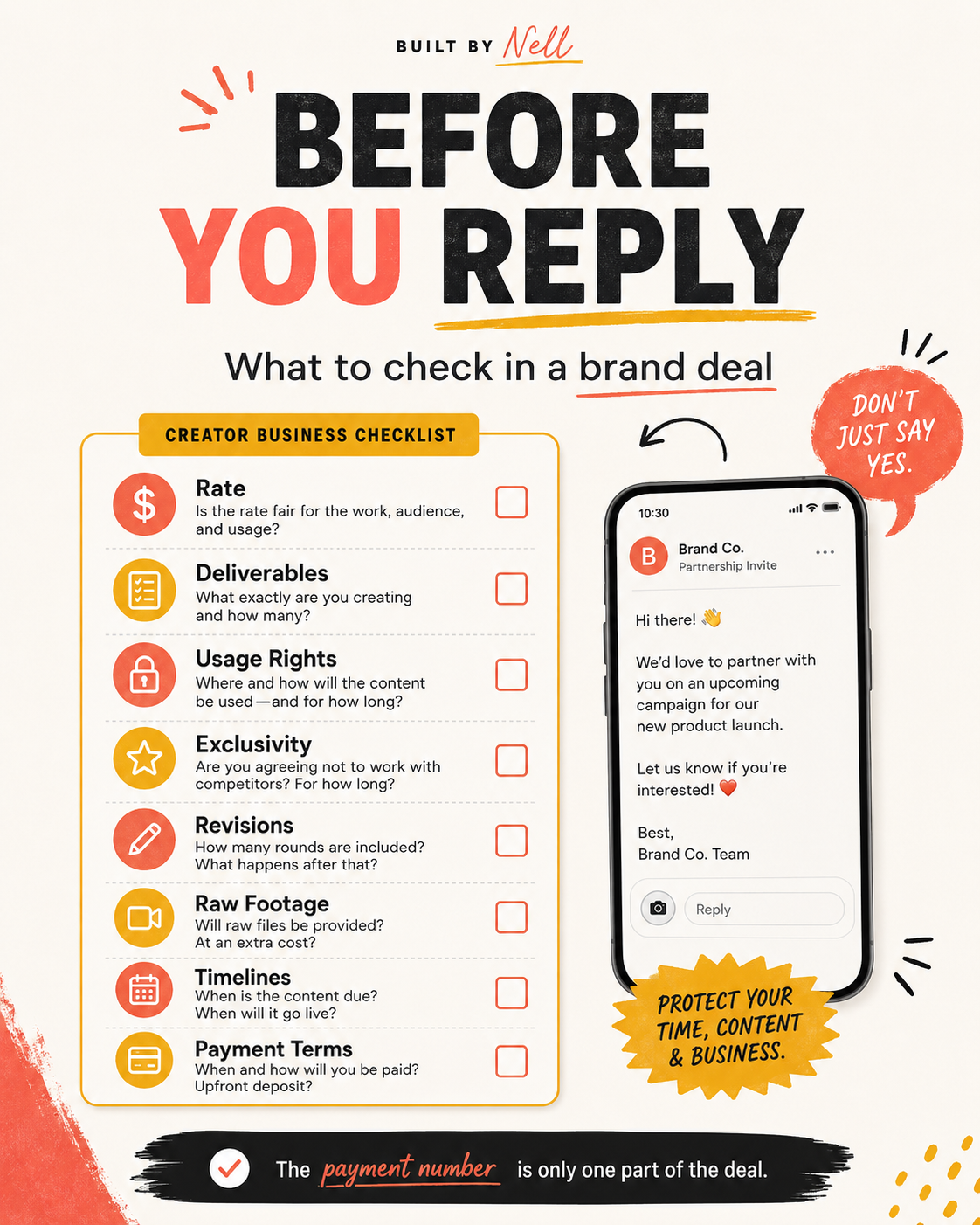
A brand deal isn’t just a flat rate. It’s usually the content itself, plus usage rights, plus exclusivity, plus revisions, plus sometimes raw footage or extended licensing the brand didn’t clearly spell out. Any one of those can change what a “fair” number looks like, and most creators find out after the fact that they left money on the table because they didn’t know to ask. If an offer feels off entirely, it’s also worth knowing how to spot a fake brand deal, and what brands actually notice before they rehire you.
A quick note: none of this is legal or contract advice. Usage rights and exclusivity terms can get genuinely complicated, and if a deal feels unclear or high-stakes, it’s worth having an actual professional look at the contract. This is meant to help you evaluate an offer with more confidence, not replace legal guidance.
That’s the exact gap the Brand Deal Calculator was built to close. You enter the details of the offer, and it walks through the full scope and terms with you, not just a number, so you can see where you actually stand before you hit reply.
What To Do Before February 2027
- Check where you stand against the new thresholds if you’re not monetized yet, and keep going if you’re close.
- Get clear on who your channel is actually for, and make more of what’s working.
- Pick one income stream outside of AdSense. Affiliate links, a digital product, coaching, or brand deals and UGC work are all realistic options depending on your content.
- Give every video a job: a link, a list signup, an offer, something.
- Start (or keep building) your email list. It’s the one audience channel that isn’t rented.
Frequently Asked Questions
Will I lose monetization if I don’t meet the new requirements?
No, if you’re already accepted into the YouTube Partner Program, this update does not remove you. The higher 8,000-hour or 20-million-Shorts-view threshold applies to new creators applying for full ad and Premium revenue sharing after February 1, 2027. Existing partners do need to review and accept updated terms in YouTube Studio, and the separate 10-million Shorts view requirement applies to everyone who wants to keep earning from Shorts revenue specifically.
What about Fan Funding or Shopping, do those thresholds change too?
No. That lower tier stays at 500 subscribers, 3 public uploads in the last 90 days, and either 3,000 qualified watch hours in the past year or 3 million qualified Shorts views in 90 days.
Should I still try to grow on YouTube if the bar is higher now?
Yes. A higher bar doesn’t mean stop building, it means don’t make the platform your entire income plan. Keep growing your channel and treat AdSense as one revenue stream among several, not the whole business.
Don’t just build a channel. Build a business your channel feeds.