Why Brands Hire You Once and Never Again: What Creators Miss About Influencer Brand Deals
Influencer brand deals can look simple from the outside: make the content, post it, get paid. But getting hired once and getting rehired are two very different things. A lot of creators think the reason they’re not getting rehired is that their audience is too small. And yes, follower count can matter. But it is not the whole story. Some creators get hired once, complete the campaign, and then the brand never reaches out again. It’s not always because the content flopped. Sometimes it’s simply because that creator was a headache to work with.
I’ve been creating content for about 14 years, and one of the biggest advantages I’ve had didn’t come from social media. It came from working in corporate. I learned how to communicate, meet deadlines, and take feedback without falling apart. Getting a brand’s attention is one thing. Making them say “we have to work with her again” is something else entirely.
Your Follower Count Is Not Your Whole Resume
Your numbers might get you noticed on a campaign list for influencer brand deals. They do not prove you know how to run a partnership. Once a brand contacts you, trust that they’re paying attention to other things: your content, your audience, and whether the product actually makes sense for your page.
Do you respond? Do you follow directions? Do you meet deadlines? Can you create strong content without turning the campaign into a group project nobody asked for? A small creator with 10,000 followers can be more reliable, and more rehireable, than a bigger creator the brand has to chase every three business days. In influencer brand deals, your numbers get you in the room. Your execution determines whether they invite you back.
Communication Is a Skill, Not a Personality Trait
You do not have to answer every email within five minutes. Nobody is asking you to be chained to your inbox. A reasonable rule of thumb is responding within about 24 hours, depending on your day. But you do need to respond in a reasonable window, and you need to do it clearly.
When a brand reaches out, acknowledge the offer. Confirm you’ve received the brief. Ask your questions before you start filming, and gather them into one email instead of sending twenty separate messages because a new question popped into your head every hour. Be clear, stay organized, and keep the conversation moving. And when something changes on your end, say so early. Do not wait until the content is already late to mention you’re not finished. For all you know, that brand manager is juggling 20 other creators and someone is already asking them why your deliverables are late.
Want to see what a brand is actually asking for before you answer?
The Brand Deal Calculator helps you evaluate the full opportunity, not just the payment number.
File Delivery and Organization Quietly Decide Whether You Get Rehired
This part isn’t glamorous, but it absolutely affects whether people work with you again. Name your files correctly. Please, for the love of everything, stop sending a brand a folder full of files labeled “draft one,” “draft two,” “final two,” and “final-final, use this one.” Check your links before you send them, submit your invoices correctly, and complete whatever tax forms the brand needs. Track your own payment terms so you’re not finding out three months later that you never confirmed a due date.
Why Gifting Campaigns Can Quietly Demand Paid-Campaign Labor
Not every offer in influencer brand deals that looks smaller is actually smaller. Sometimes a gifting collaboration comes with the exact same demands as a paid campaign: multiple pieces of content, specific platforms, usage rights, a posting schedule. If a “free product” deal is asking for the same deliverables as a paid one, that’s worth noticing before you say yes. Gifted does not automatically mean lightweight.
In influencer brand deals, if a brand pays you, gifts you a product, or gives you something else of value in connection with an endorsement, make sure you’re also following the FTC’s disclosure guidance.
Read the Terms of Influencer Brand Deals Before You Say Yes
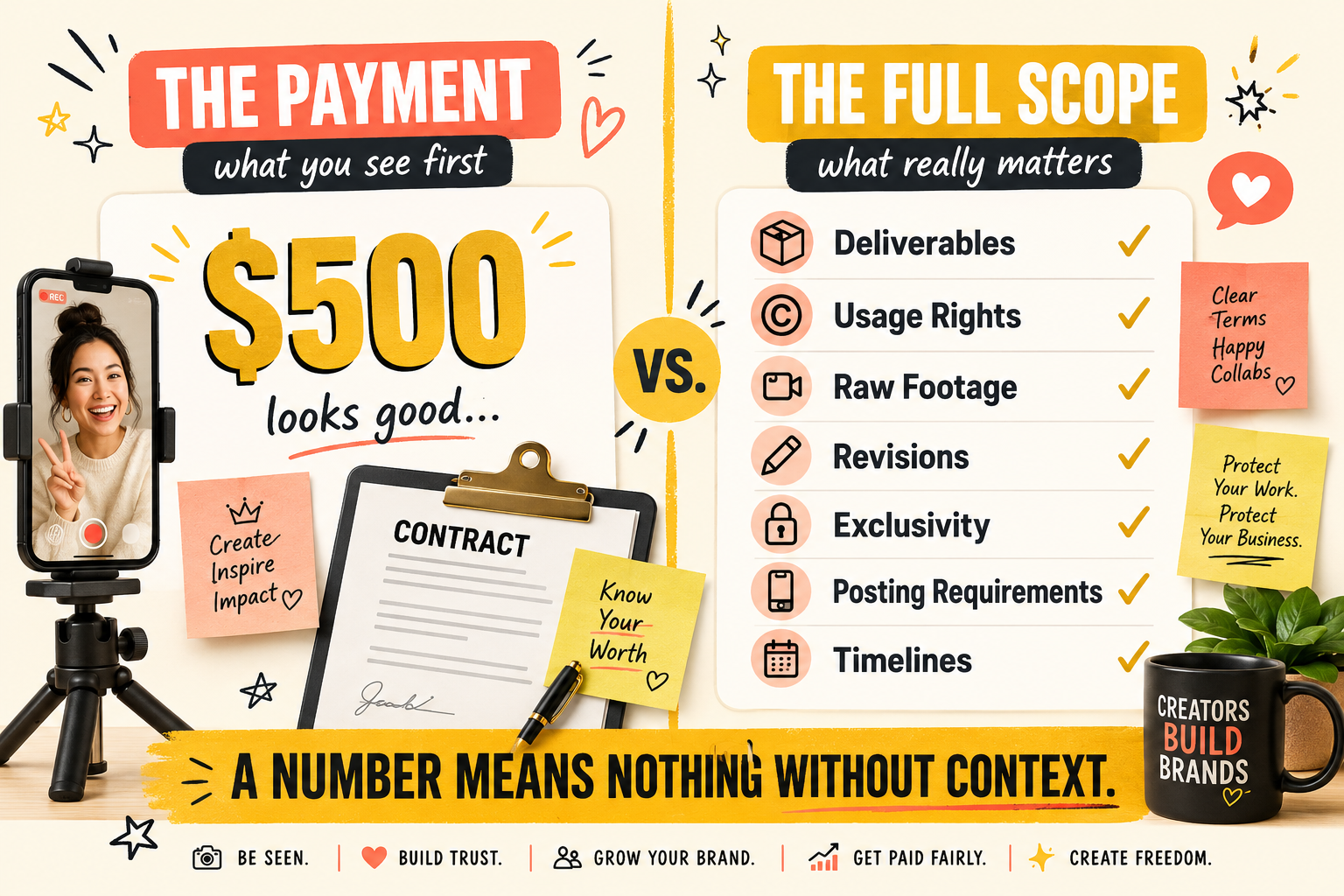
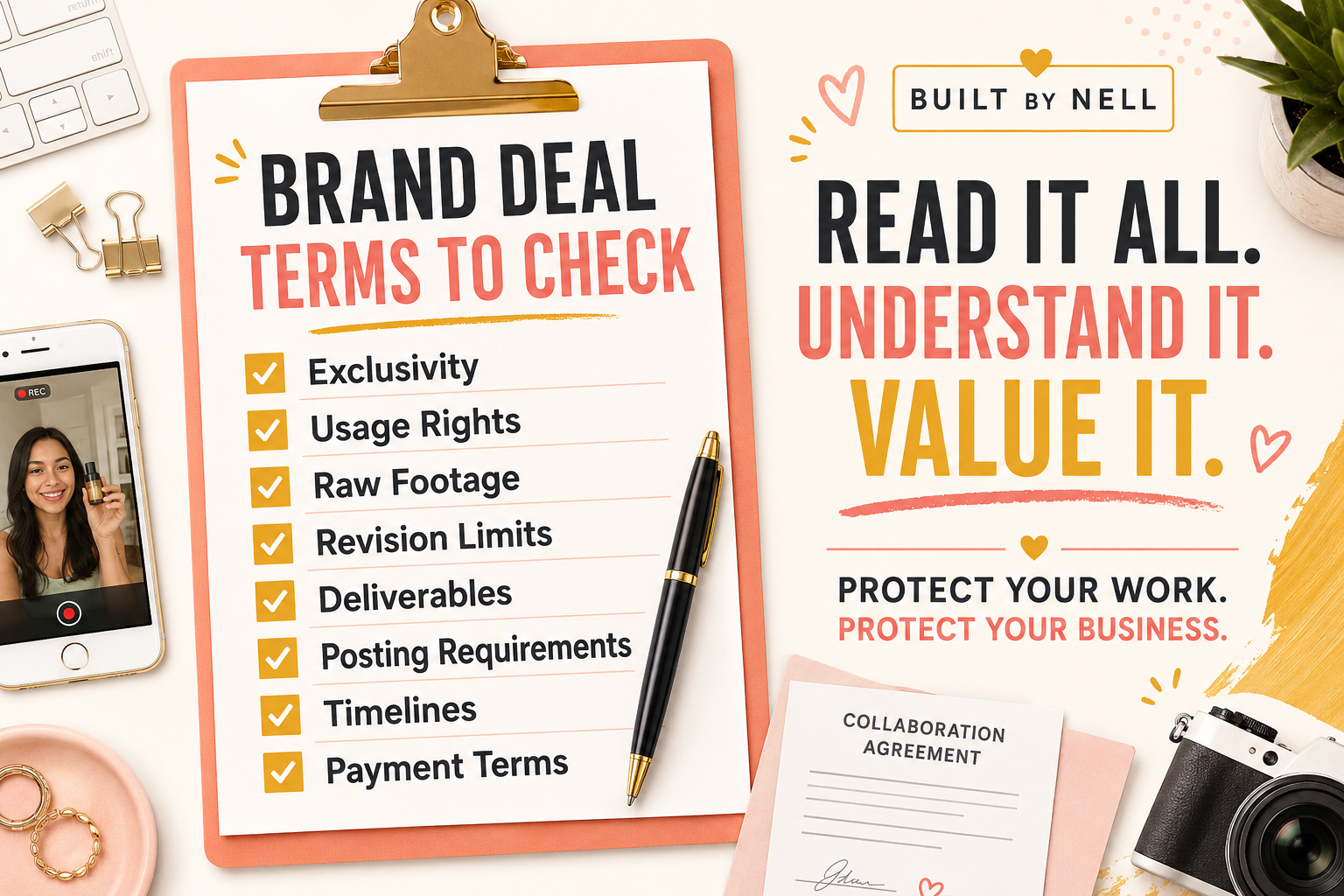
They say reading is fundamental, but please, actually read what you’re agreeing to. Read the offer, the brief, and the contract, including the part you probably scroll past because the number at the top looks enticing. How many pieces of content do they want? What platforms are you posting to? Are you required to post at all, or just create? How many revisions are included? When is everything due, and how long does the content need to stay live? Are there usage rights attached? Is there exclusivity?
You cannot decide whether influencer brand deals are fair by looking at the number alone.
Exclusivity Should Cost Extra
Sometimes the rate isn’t terrible on its own, but the exclusivity clause is what quietly changes the math. If a brand wants you to sit out working with their competitors for six months, that is a real cost to you, not a minor detail buried in section four. That should be priced separately, and you should ask for it.
Raw Footage Requests Are a Real Ask
If a brand wants your raw footage on top of the edited deliverable, that is additional labor and additional risk. It is a reasonable thing to ask about, and a reasonable thing to charge for.
Usage Rights and the Meaning (and Danger) of Perpetuity
Usage rights determine how long and where a brand can use your content after you deliver it. Some contracts ask for a set window. Some ask for something much bigger, and that’s where the word “perpetuity” shows up. Perpetuity means the brand could use your likeness and your content essentially forever, without paying you again for that continued use. It’s a word worth stopping on, not skimming past.
The First Number Doesn’t Tell You If You’re Being Lowballed
That number can sound decent right up until you realize they also want 20 videos a month, unlimited revisions, your raw footage, and a year of paid usage rights. Then let’s throw in six months of exclusivity on top of that. Suddenly that “generous” flat fee is quietly doing the work of five separate fees you should have been paid for individually. The fee cannot be evaluated on its own. It only means something once you know what it’s actually buying: how much content, how many revisions, what usage, what exclusivity, and whether raw footage is part of the ask. A bad deal does not become a good deal just because there’s money attached to it.
See What Your Brand Deal Is Worth →
How Creators Protect Themselves Through Documentation
Speaking from experience with influencer brand deals, one thing that will wear you down fast is having to repeatedly chase a brand for your own money. Having everything documented- the offer, the brief, the agreed deliverables, the payment terms- makes it so much easier to state your case if a brand tries to skip out on paying you. In the rare, genuinely frustrating cases where you end up needing to involve an attorney, that documentation is what makes your case easier to make. (To be clear, none of this is legal advice. It’s a practical habit, not a legal opinion.)
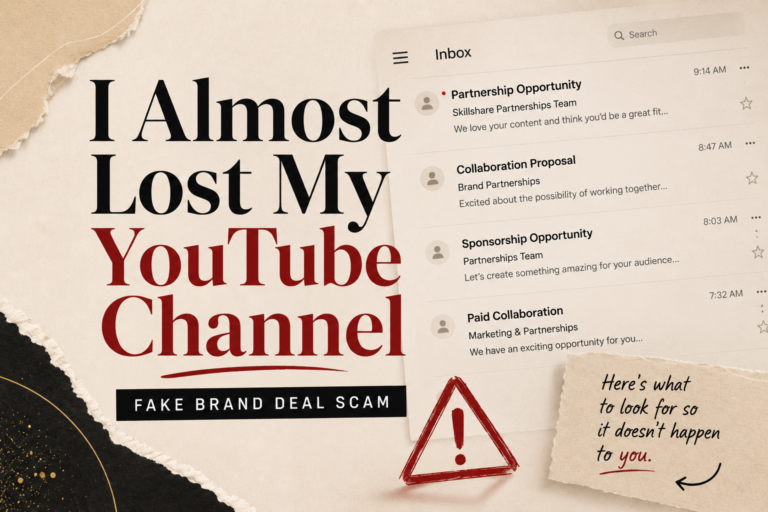
If you want a closer look at how convincing a bad deal can look before you slow down and check it, a fake brand deal almost cost me my entire YouTube channel, and the same instinct to pause and verify applies here too.
Revisions Have Boundaries Too
A revision request does not automatically mean the brand hates you. Sometimes you missed something in the brief. Sometimes legal wants a word removed. Sometimes the edit genuinely gets better. That’s just business. But let’s make one thing clear: feedback does not mean unlimited free labor. There’s a real difference between a reasonable revision and a completely new concept, and there’s a real difference between tweaking a caption and reshooting an entire video.
That’s why the original scope matters, and why keeping everything in writing protects you. Being professional does not mean saying yes to everything. It means staying calm, staying clear, and knowing when to say a request falls outside the original scope, so yeah, there’s going to be an additional fee for that.
The Real Goal Is Repeat Work
Brands are not only hiring your creativity. They’re hiring your ability to actually complete the work: managing personalities, taking feedback without a personal crisis, hitting deadlines. That’s a business skill, not just an “employee skill,” and it’s exactly why some creators get rehired on multiple campaigns while others don’t.
That matters because the first deal is not the real prize. There’s an old saying that the first price is usually the fool’s price, and there’s a reason it’s stuck around.
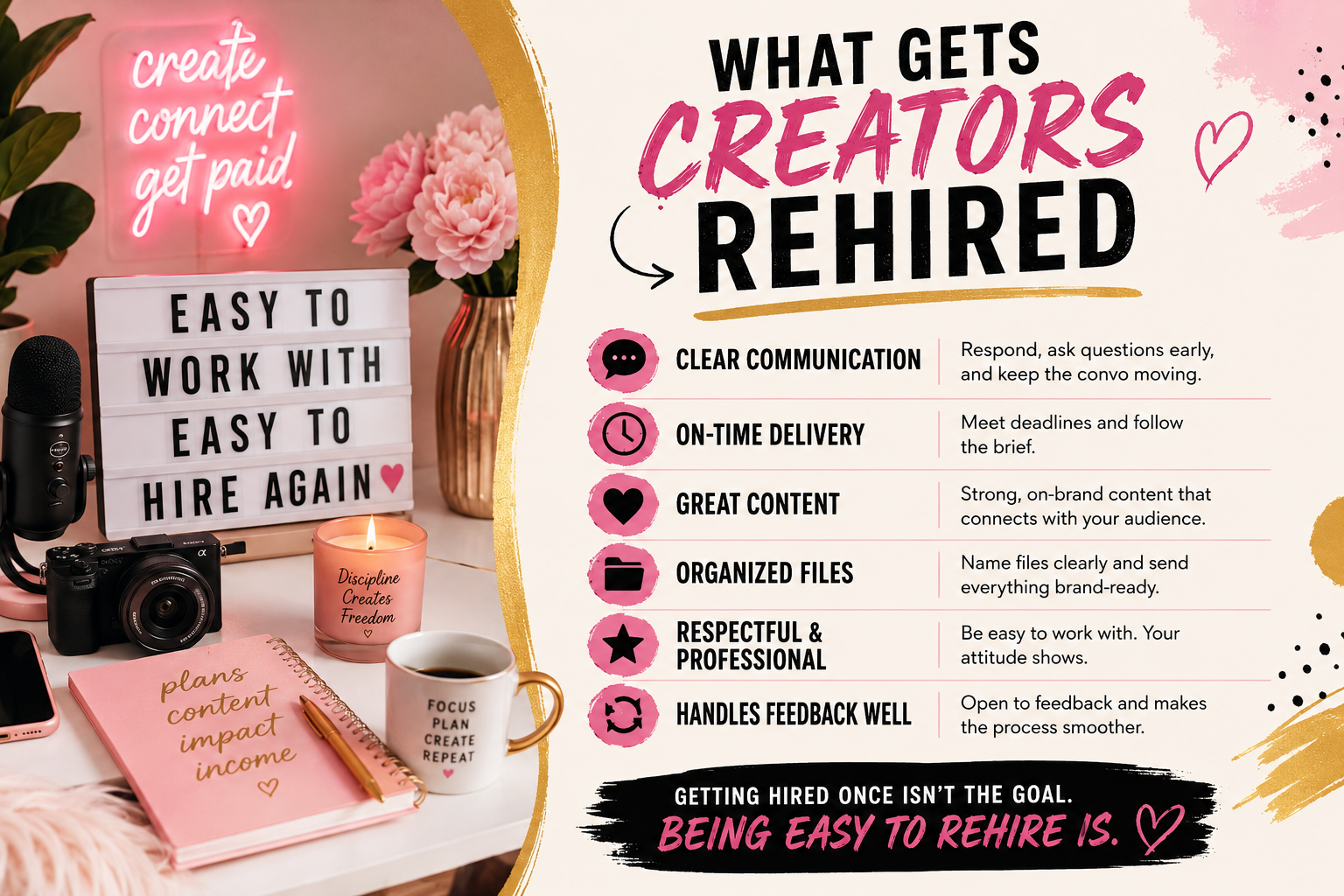
Landing one brand deal is great, but the goal isn’t to get hired once and spend the next six months hunting for the next one. The real goal is becoming someone a brand already trusts when the next campaign comes up. A strong relationship can lead to repeat campaigns, ambassador opportunities, recurring content, and referrals to other brands, because brand teams talk to each other more than creators think. That’s how one deal starts becoming an actual business instead of a series of one-off paydays.
Why I Built the Brand Deal Calculator
AI has made managing brand work a lot easier for me, but let me be clear about what it actually does. AI is not out here building relationships for me. It can summarize a long brief, turn deadlines and deliverables into a checklist, and help with brainstorming. That saves time, but it does not decide what my work is worth, it does not negotiate my boundaries, and it does not make the final call on whether I accept, counter, or decline an offer. That’s on me. If you want a broader look at how I use AI as an assistant rather than a decision-maker across the rest of my business, I broke that down here.
That’s exactly why I built the Brand Deal Calculator for influencer brand deals. Creators get offers with all kinds of moving parts: exclusivity, revisions, gifting, affiliate commission, flat fees, usage rights, raw footage requests. After years of people asking me these same questions, I’ve realized most people were never taught how to put all of it together into one clear answer.
Sometimes a payment looks good until you realize how much content is actually being asked for. Sometimes a gifting collaboration comes with paid-campaign demands. Sometimes the rate is fine, but the exclusivity should have cost extra. I built this so you don’t have to stare at a brand email wondering if you’re being lowballed, whether you should have countered, or why they’re suddenly asking for your raw footage.
To be clear: the calculator is not legal advice, and it is not built to make every decision for you. It’s designed to help you understand what’s actually being asked of you, spot the areas that need a closer look, and approach your response with a more informed decision rather than a guess.
If you’re tired of staring at a brand email trying to figure out whether you’re being lowballed on influencer brand deals, here’s what’s included:
- $35, one-time
- Limited to 20 founding customers
- Includes 20 total Quick Deal Scans
- Includes unlimited guided use
- No account required
- Access remains available while the calculator is active and supported
- Your access code and instructions are emailed within one business day