How to Get More YouTube Watch Hours Without Posting Every Day
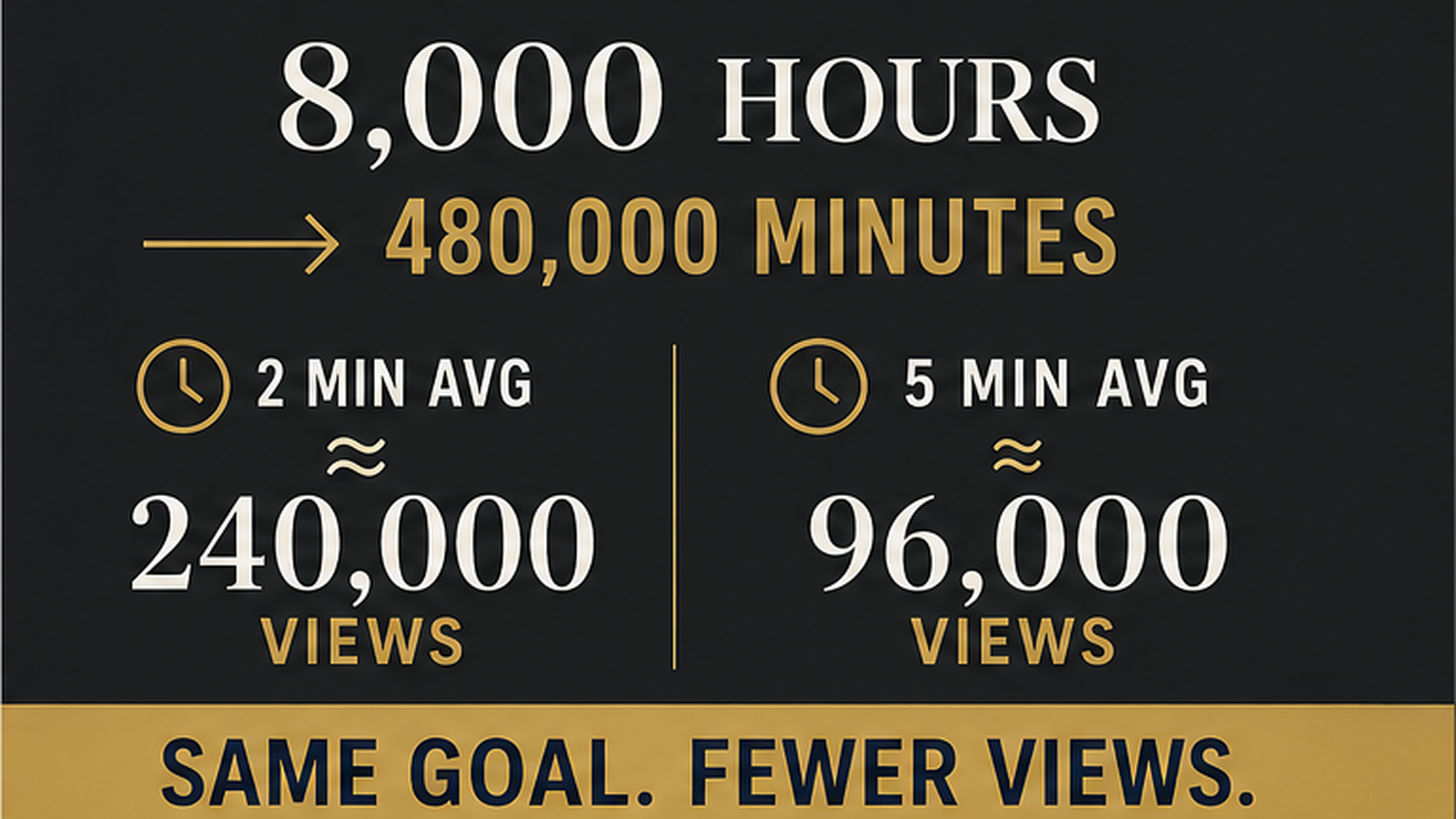
8,000 watch hours sounds ridiculous until you turn it into minutes. That’s 480,000 minutes of people actually watching, and how you get there changes completely depending on how long each person sticks around.
This is my real-time answer to how to get more YouTube watch hours without relying on posting daily. I’m testing a strategy to reach 8,000 hours on Built By Nell. I’ve built serious watch time before on NaturallyNellzy, but this is a different channel, a different audience, and a much more intentional experiment. Instead of assuming I need to post more, I’m trying to get more out of each video.
Prefer to watch it? Here’s the full breakdown, including the math and the four-part plan I’m testing.
Start With the Math
8,000 hours is 480,000 minutes. That number alone doesn’t tell you much until you divide it by how long people actually watch.
- At a 2-minute average view duration: 480,000 ÷ 2 ≈ 240,000 views needed
- At a 5-minute average view duration: 480,000 ÷ 5 ≈ 96,000 views needed
Same goal. Fewer views. That’s the whole point of this experiment. I’m not saying every video has to average exactly five minutes, that’s not realistic or even the right goal for every format. The point is that average view duration is a lever, not a footnote. If you only chase more traffic, you’re always solving the hardest version of the problem.
Stop Creating YouTube Videos on Vibes
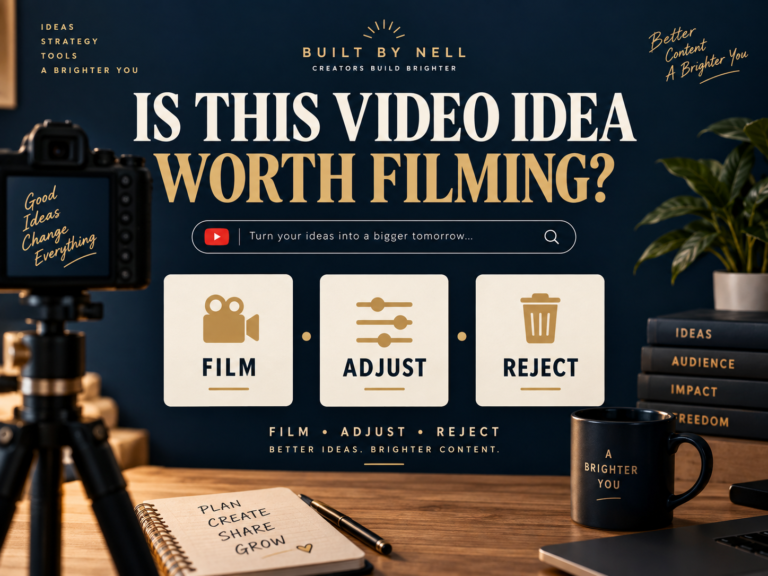
For a long time my process for picking a long-form topic was basically vibes. Something felt interesting, so I filmed it. That’s an expensive way to find out an idea doesn’t have an audience, especially for long-form video, where a bad topic costs you hours of filming and editing, not just a few minutes.
Before I film anything long-form now, I validate the idea first. Not to guarantee it performs, nothing guarantees that, but to collect enough evidence to decide if it’s worth the hours.
Before you spend hours filming something nobody asked for, grab my free YouTube Idea Validation Checklist + AI Prompt to check the demand, find your angle, and decide whether the idea is worth your time.
How I Research YouTube Ideas Before Filming
The research itself is not complicated. It just has to actually happen before you hit record, not after the video underperforms.
- Search the topic on YouTube and see what already ranks
- Study videos that are already getting views, and how recently
- Look at repeated title and search language across multiple videos
- Read the comments on those videos for real questions people are asking
- Check what your own audience has already responded to
- Look for an angle that isn’t already saturated
That last point matters. If five channels already made the same video with the same angle, you don’t need a sixth version. You need a different one, or a genuinely better answer to a question the others left open.
How I Use AI Without Letting It Pick My Content Strategy
AI is genuinely useful here, but only in one specific role: assistant, not strategist. I don’t ask it to invent ideas out of nowhere. I’ve tried the “give me 50 viral video ideas” prompt before, and what comes back is generic, because the AI has no actual evidence of demand, it’s just pattern-matching on nothing.
What actually works is doing the research first, the searching, the titles, the comments, the view counts and dates, and then handing that evidence to AI and asking it to analyze it. Things like:
- What does this evidence actually show about demand?
- Which angles are already saturated or repetitive?
- What questions are people asking that nobody has fully answered?
- Where’s the differentiated angle, based on what’s actually here?
- What evidence is missing that I should go find before deciding?
- What title direction fits the language people are already searching?
AI is good at organizing and analyzing evidence fast. It is not good at knowing what your audience actually wants, because it doesn’t have that information unless you give it to it. If you’re building AI into more of your workflow beyond content research, I’ve also written about how I use AI to delegate tasks in my business without losing control of the decisions that actually matter.
A Click Is Not Enough
Getting the click is only step one. Once someone clicks, three different numbers tell you three different things, and mixing them up leads to fixing the wrong problem.
- CTR (click-through rate): how many people who saw your thumbnail and title actually clicked
- Average view duration: how long people watch, on average, across all viewers
- Audience retention: the shape of where people drop off throughout the video, not just the average
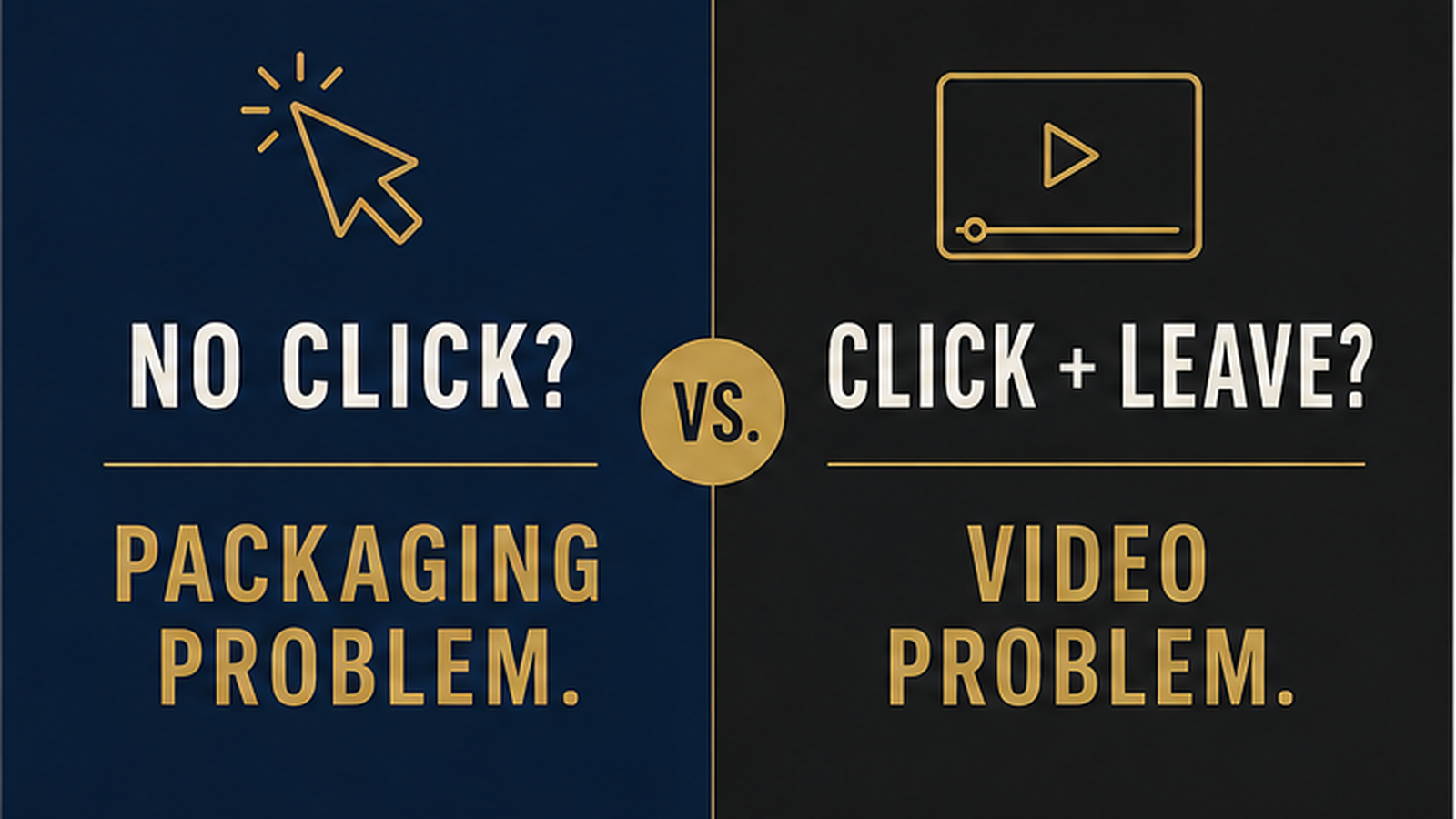
Here’s the simple diagnostic I use: no click means a packaging problem, your thumbnail or title isn’t earning the click. Click and leave means a video problem, the content itself isn’t holding attention once someone’s actually watching. Those are two completely different fixes, and a lot of creators try to fix the wrong one.
Get More Watch Time From Every View
Once you know which problem you actually have, the fix follows. If it’s packaging, that’s a thumbnail and title problem, test a clearer promise, a stronger visual, language that matches what people are already searching. If it’s a video problem, look at where retention actually drops in your analytics and ask what happens right before that moment. Usually it’s a slow open, a tangent, or a section that doesn’t deliver on what the title promised.
The point isn’t to manufacture fake suspense or clickbait your way to longer watch time. It’s to actually deliver what you promised, faster, and keep delivering it.
One Viewer Should Lead to Another Video
One viewer does not have to equal one video. Most videos end with some version of “like, comment, and subscribe,” which is fine, but it doesn’t actually do anything to extend watch time. A better question to end on: what does this person logically need to watch next?
If someone just watched a video about validating YouTube ideas, the next logical video might be about turning that validated idea into a script, or about the analytics that tell you if it worked. Building videos that connect to each other, through end screens, through what you say at the end, through how you structure a series, turns a single viewer into multiple sessions instead of one.
Lower-Edit Long-Form Can Create More Watch-Time Opportunities
More watch-time opportunities shouldn’t require burning yourself out on production. Lower-edit does not mean lower quality, it means formats that don’t demand hours of editing for every single upload. That can look like simpler talking-head videos, livestreams where they genuinely fit your content, repeatable series with a consistent structure, or educational formats that need less post-production polish to still deliver value.
This is also where sustainability comes in. A strategy that only works if you post daily and edit for six hours each time isn’t a strategy, it’s a countdown to burnout. I’ve written more about staying consistent with content creation when everything goes wrong, and the short version is: build formats you can actually sustain, not just ones that look impressive for a month.
Do Live Streams Count Toward Watch Hours?
According to YouTube’s official explanation of qualified watch hours, livestream watch time can count when the stream remains public and is converted to video on demand. Livestreams that are unlisted, deleted, or not converted to VOD do not count toward YPP watch-hour thresholds.
How to Get More YouTube Watch Hours: The Four-Part Plan I’m Testing
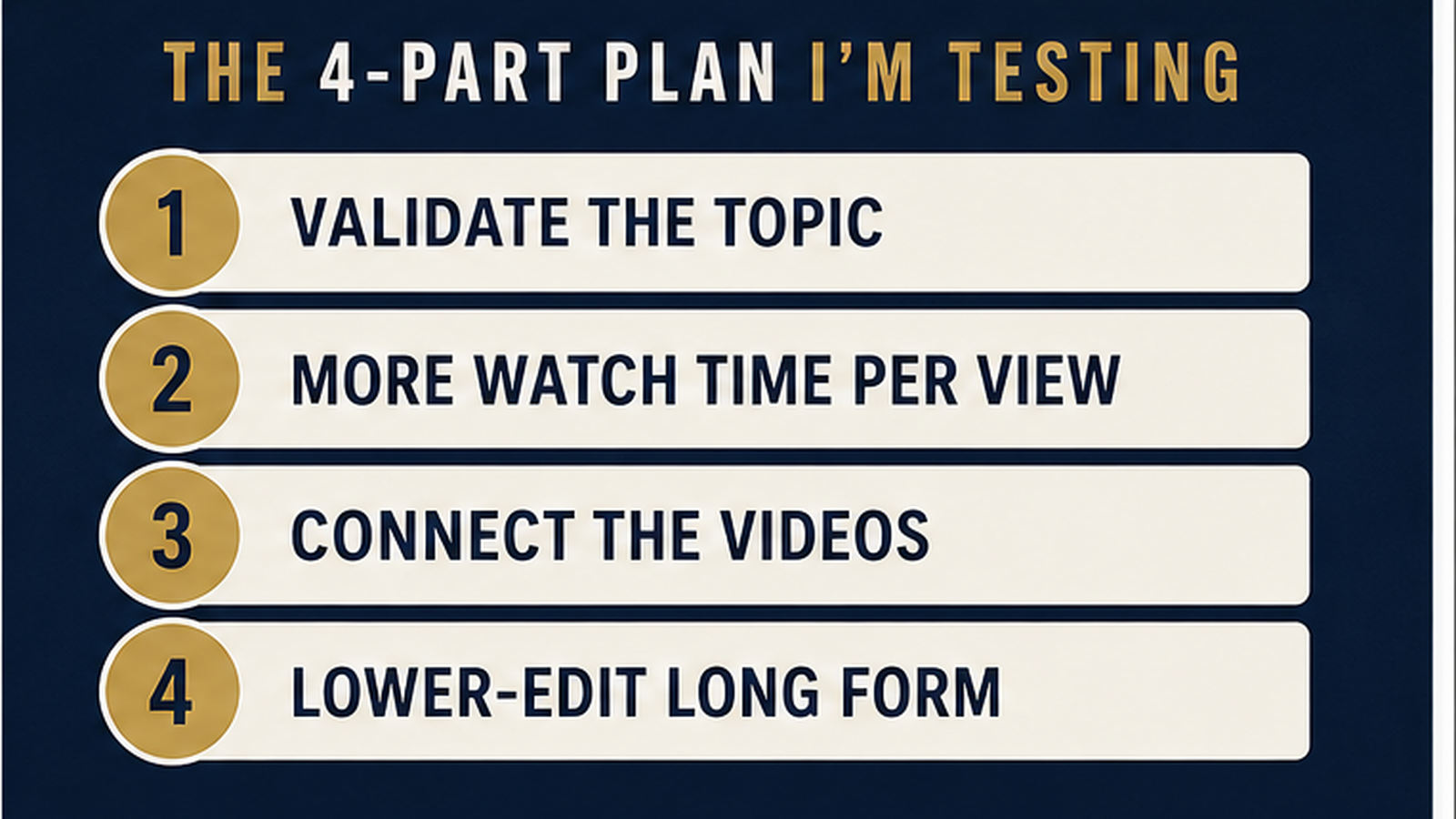
Here’s the actual strategy, put together:
- Validate the topic before filming. Use real search and audience evidence, not vibes, to decide if an idea deserves hours of production.
- Get more watch time from every view. Diagnose whether the problem is packaging or the video itself, then fix the right one.
- Connect the videos. Build a viewing path so one viewer naturally leads to another video instead of ending the session.
- Use lower-edit long-form formats where it makes sense. Make the strategy sustainable enough to actually keep doing it.
None of these four things require posting daily. All four of them require being more intentional than “make a video, hope it works.”
I’m Tracking This in Public
At the time I filmed this video, Built By Nell was at 29 qualified watch hours. That’s not a typo, and I’m not going to pretend otherwise. This is a build-in-public experiment, not a case study with a tidy ending. I picked 8,000 as my own benchmark for this project, and I’m documenting what actually moves that number as I go, including the wider YouTube monetization changes taking effect in 2027 that make watch time worth paying attention to right now.
For context on the official numbers: as of now, YouTube’s current Partner Program threshold for new applicants is 1,000 subscribers plus 4,000 qualified watch hours in the past 12 months (or 10 million qualified Shorts views in 90 days). Starting February 1, 2027, that threshold for new applicants rises to 8,000 qualified watch hours or 20 million qualified Shorts views. My 8,000-hour goal is a personal project benchmark, not a claim about what YouTube currently requires of every creator.
If you want to follow along and see what’s actually working (and what isn’t), that’s exactly what I’m posting as this experiment continues. And if you want to skip straight to not wasting hours on an idea that was never going to work, That’s the honest, in-progress version of how to get more YouTube watch hours, not a highlight reel. Grab the free YouTube Idea Validation Checklist + AI Prompt before your next filming day.
Frequently Asked Questions
How do I get more watch hours on YouTube?
The short version of how to get more YouTube watch hours is this: focus on two levers together: getting the right people to click (packaging) and getting them to stay once they do (the video itself). Validating your topic before filming and building videos that lead into each other both increase watch hours without requiring more uploads.
Does average view duration affect YouTube watch time?
Yes. Watch hours are simply views multiplied by average view duration. Increasing how long people watch per view can dramatically reduce how many total views you need to hit a watch-time goal.
Do YouTube livestreams count toward watch hours?
Archived livestreams count toward qualified watch hours the same as any public long-form video. The live broadcast itself, while actively streaming, does not count until it’s archived.
How can I increase watch time without posting every day?
Post less often but validate ideas before filming, focus on retention and packaging for the videos you do make, and connect your videos so one view leads to another. Frequency is one lever. It’s not the only one.
How do I know if a YouTube video idea is worth filming?
Look for real evidence before you film: existing videos on the topic getting views, repeated search and title language, comments with unanswered questions, and signals from your own audience. If that evidence is missing, the idea needs more research, not more confidence.
Build it. Test it. Teach it. That’s the whole approach here, including the parts that aren’t working yet.